
Archives AI News
Cronos: The New Dawn Launch Trailer
🚀 How Startups and Universities Spark Innovation
Target Promo Codes and Deals: Up to 50% Off
Enjoy $50 off your next order, 20% off sitewide, and up to 50% off with Target coupon codes and deals available this month.
Google Launches Gemini 2.5 Flash Image with Advanced Editing and Consistency Features
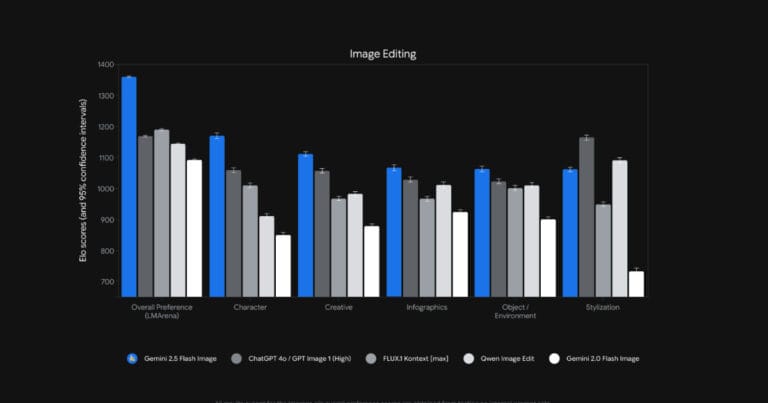
Google released Gemini 2.5 Flash Image (nicknamed nano-banana), its newest image generation and editing model. The system introduces several upgrades over earlier Flash models, including character consistency across prompts, multi-image fusion, precise prompt-based editing, and integration of world knowledge for semantic understanding. By Robert Krzaczyński
A Deep Dive into RabbitMQ & Python’s Celery: How to Optimise Your Queues
Key lessons I’ve learned running RabbitMQ + Celery in production The post A Deep Dive into RabbitMQ & Python’s Celery: How to Optimise Your Queues appeared first on Towards Data Science.
Tencent Hunyuan Open-Sources Hunyuan-MT-7B and Hunyuan-MT-Chimera-7B: A State-of-the-Art Multilingual Translation Models
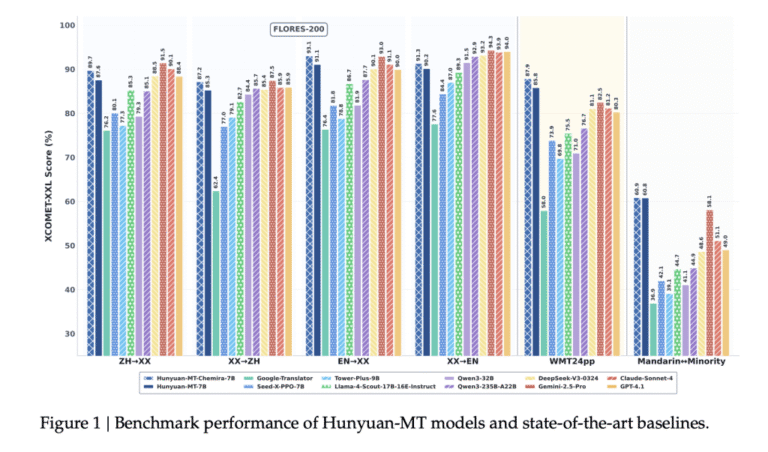
Introduction Tencent’s Hunyuan team has released Hunyuan-MT-7B (a translation model) and Hunyuan-MT-Chimera-7B (an ensemble model). Both models are designed specifically for multilingual machine translation and were introduced in conjunction with Tencent’s participation in the WMT2025 General Machine Translation shared task, where Hunyuan-MT-7B ranked first in 30 out of 31 language pairs. Model Overview Hunyuan-MT-7B Hunyuan-MT-Chimera-7B […] The post Tencent Hunyuan Open-Sources Hunyuan-MT-7B and Hunyuan-MT-Chimera-7B: A State-of-the-Art Multilingual Translation Models appeared first on MarkTechPost.
Hermes 4 Technical Report
arXiv:2508.18255v2 Announce Type: replace Abstract: We present Hermes 4, a family of hybrid reasoning models that combine structured, multi-turn reasoning with broad instruction-following ability. We describe the challenges encountered during data curation, synthesis, training, and evaluation, and outline the solutions employed to address these challenges at scale. We comprehensively evaluate across mathematical reasoning, coding, knowledge, comprehension, and alignment benchmarks, and we report both quantitative performance and qualitative behavioral analysis. To support open research, all model weights are published publicly at https://huggingface.co/collections/NousResearch/hermes-4-collection-68a731bfd452e20816725728
OmniDPO: A Preference Optimization Framework to Address Omni-Modal Hallucination
arXiv:2509.00723v1 Announce Type: new Abstract: Recently, Omni-modal large language models (OLLMs) have sparked a new wave of research, achieving impressive results in tasks such as audio-video understanding and real-time environment perception. However, hallucination issues still persist. Similar to the bimodal setting, the priors from the text modality tend to dominate, leading OLLMs to rely more heavily on textual cues while neglecting visual and audio information. In addition, fully multimodal scenarios introduce new challenges. Most existing models align visual or auditory modalities with text independently during training, while ignoring the intrinsic correlations between video and its corresponding audio. This oversight results in hallucinations when reasoning requires interpreting hidden audio cues embedded in video content. To address these challenges, we propose OmniDPO, a preference-alignment framework designed to mitigate hallucinations in OLLMs. Specifically, OmniDPO incorporates two strategies: (1) constructing text-preference sample pairs to enhance the model's understanding of audio-video interactions; and (2) constructing multimodal-preference sample pairs to strengthen the model's attention to visual and auditory information. By tackling both challenges, OmniDPO effectively improves multimodal grounding and reduces hallucination. Experiments conducted on two OLLMs demonstrate that OmniDPO not only effectively mitigates multimodal hallucinations but also significantly enhances the models' reasoning capabilities across modalities. All code and datasets will be released upon paper acceptance.
On Verifiable Legal Reasoning: A Multi-Agent Framework with Formalized Knowledge Representations
arXiv:2509.00710v1 Announce Type: new Abstract: Legal reasoning requires both precise interpretation of statutory language and consistent application of complex rules, presenting significant challenges for AI systems. This paper introduces a modular multi-agent framework that decomposes legal reasoning into distinct knowledge acquisition and application stages. In the first stage, specialized agents extract legal concepts and formalize rules to create verifiable intermediate representations of statutes. The second stage applies this knowledge to specific cases through three steps: analyzing queries to map case facts onto the ontology schema, performing symbolic inference to derive logically entailed conclusions, and generating final answers using a programmatic implementation that operationalizes the ontological knowledge. This bridging of natural language understanding with symbolic reasoning provides explicit and verifiable inspection points, significantly enhancing transparency compared to end-to-end approaches. Evaluation on statutory tax calculation tasks demonstrates substantial improvements, with foundational models achieving 76.4% accuracy compared to 18.8% baseline performance, effectively narrowing the performance gap between reasoning and foundational models. These findings suggest that modular architectures with formalized knowledge representations can make sophisticated legal reasoning more accessible through computationally efficient models while enhancing consistency and explainability in AI legal reasoning, establishing a foundation for future research into more transparent, trustworthy, and effective AI systems for legal domain.