Archives AI News

Gemeinsam gegen Geldwäsche: Wie EuroDaT den sicheren Austausch sensibler Finanzdaten ermöglicht

EuroDaT Header Image Blog Article.max 600x600 1

Ein Beitrag von Dr. Alexander Alldridge, Geschäftsführer von EuroDaTGeldwäschebekämpfung ist Teamarbeit. Banken, Regierungen und Technologiepartner müssen eng zusammenarbeiten, um kriminelle Netzwerke effektiv aufzudecken. Diese Herausforderung ist im streng regulierten Finanzsektor besonders komplex: Wie funktioniert Datenabgleich, wenn die Daten, um die es geht, hochsensibel sind? In diesem Blogbeitrag erklärt Dr. Alexander Alldridge, Geschäftsführer von EuroDaT, welche Rolle ein Datentreuhänder dabei spielen kann – und wie EuroDaT mit Lösungen von Google Cloud eine skalierbare, DSGVO-konforme Infrastruktur für genau diesen Zweck aufgebaut hat. Wenn eine Bank eine verdächtige Buchung bemerkt, beginnt ein sensibler Abstimmungsprozess. Um mögliche Geldflüsse nachzuverfolgen, bittet sie andere Banken um Informationen zu bestimmten Transaktionen oder Konten. Aktuell geschieht das meist telefonisch – nicht, weil es keine digitalen Alternativen gäbe, sondern weil die Weitergabe sensibler Finanzdaten wie IBANs oder Kontobewegungen nur unter sehr engen rechtlichen Vorgaben erlaubt ist.Das Hin und Her per Telefon ist nicht nur mühsam, sondern auch fehleranfällig. Deutlich schneller und sicherer wäre ein digitaler Datenabgleich, der nur berechtigten Stellen Zugriff auf genau die Informationen gibt, die sie im konkreten Verdachtsfall benötigen.Hier bei EuroDaT, einer Tochtergesellschaft des Landes Hessen, bieten wir genau das: Als Europas erster transaktionsbasierter Datentreuhänder ermöglichen wir einen kontrollierten, anlassbezogenen Austausch sensibler Finanzdaten, der vertrauliche Informationen schützt und alle gesetzlichen Vorgaben erfüllt.safeAML: Ein neuer Weg für den Datenaustausch im FinanzsektorMit safeAML haben wir in Zusammenarbeit mit der Commerzbank, der Deutschen Bank und N26 ein System entwickelt, das den Informationsaustausch zwischen Finanzinstituten digitalisiert. Statt aufwendig andere Institute abzutelefonieren, kann künftig jede Bank selbst die relevanten Daten von anderen Banken hinzuziehen, um auffällige Transaktionen besser einordnen zu können.Der Datenaustausch läuft dabei kontrolliert und datenschutzkonform ab: Die Daten werden pseudonymisiert verarbeitet und so weitergegeben, dass nur die anfragende Bank sie am Ende wieder zuordnen kann. Wir bei EuroDaT haben als Datentreuhänder zu keinem Zeitpunkt Zugriff auf personenbezogene Inhalte. safeAML Anwendung Höchste Sicherheits- und Compliance-Standards mit Google CloudsafeAML ist eine Cloud-native Anwendung, wird also vollständig in der Cloud entwickelt und betrieben. Dafür braucht es eine Infrastruktur, die nicht nur technisch leistungsfähig ist, sondern auch die strengen Vorgaben im Finanzsektor erfüllt – von der DSGVO bis zu branchenspezifischen Sicherheits- und Cyber-Resilienz-Anforderungen. Google Cloud bietet dafür eine starke Basis, weil das Google Cloud-Team technisch und vertraglich schon früh die passenden Grundlagen für solche sensiblen Anwendungsfälle gelegt hat. Für uns war das ein entscheidender Vorteil gegenüber anderen Anbietern.Unsere gesamte Infrastruktur ist auf Google Kubernetes Engine (GKE) aufgebaut. Darüber richten wir sichere, isolierte Umgebungen ein, in denen jede Anfrage nachvollziehbar und getrennt von anderen verarbeitet werden kann. Alle technischen Ressourcen, darunter auch unsere Virtual Private Clouds (VPCs), sind in der Google-Cloud-Umgebung über Infrastruktur als Code definiert. Das bedeutet: Die gesamte Infrastruktur von EuroDaT wird automatisiert und wiederholbar aufgebaut, inklusive der Regeln dafür, welche Daten wohin fließen dürfen.Diese transparente, einfach reproduzierbare Architektur hilft uns auch dabei, die strengen Compliance-Anforderungen im Finanzsektor zu erfüllen: Wir können jederzeit belegen, dass sicherheitsrelevante Vorgaben automatisch umgesetzt und überprüft werden. Banken nutzen safeAML für schnellere VerdachtsprüfungsafeAML ist inzwischen bei den ersten deutschen Banken testweise im Einsatz, um verdächtige Transaktionen schneller und besser einordnen zu können. Anstatt wie gewohnt zum Telefon greifen zu müssen, können Ermittler*innen jetzt gezielt ergänzende Informationen von anderen Instituten einholen, ohne dabei sensible Daten offenzulegen.Das beschleunigt nicht nur die Prüfung, sondern reduziert auch Fehlalarme, die bisher viel Zeit und Kapazitäten gebunden haben. Die Meldung, ob ein Geldwäscheverdacht vorliegt, bleibt dabei weiterhin eine menschliche Einzelfallentscheidung, wie es das deutsche Recht verlangt.Dass Banken über safeAML erstmals kontrolliert Daten austauschen können, ist bereits ein großer Schritt für die Geldwäschebekämpfung in Deutschland. Wir stehen aber noch am Anfang: Jetzt geht es darum, mehr Banken einzubinden, die Vernetzung national und international auszuweiten und den Prozess so unkompliziert wie möglich zu machen. Denn je mehr Institute mitmachen, desto besser können wir ein vollständiges Bild verdächtiger Geldflüsse zeichnen. Die neue Datenbasis kann künftig auch dabei helfen, Verdachtsfälle besser einzuordnen und fundierter zu bewerten. Nachhaltiger Datenschutz: Sicherer Austausch von ESG-DatenUnsere Lösung ist aber nicht auf den Finanzbereich beschränkt. Als Datentreuhänder können wir das Grundprinzip, sensible Daten nur gezielt und kontrolliert zwischen dazu berechtigten Parteien zugänglich zu machen, auch auf viele andere Bereiche übertragen. Wir arbeiten dabei immer mit Partnern zusammen, die ihre Anwendungsideen auf EuroDaT umsetzen, und bleiben als Datentreuhänder selbst neutral. Leistungsangebot EuroDaT Ein aktuelles Beispiel sind ESG-Daten: Nicht nur große Firmen, sondern auch kleine und mittlere Unternehmen stehen zunehmend unter Druck, Nachhaltigkeitskennzahlen offenzulegen – sei es wegen neuer gesetzlicher Vorgaben oder weil Geschäftspartner wie Banken und Versicherer sie einfordern.Gerade für kleinere Firmen ist es schwierig, diesen Anforderungen gerecht zu werden. Sie haben oft nicht die nötigen Strukturen oder Ressourcen, um ESG-Daten standardisiert bereitzustellen, und möchten sensible Informationen wie Verbrauchsdaten verständlicherweise auch nicht einfach öffentlich machen.Hier kommt EuroDaT ins Spiel: Wir sorgen als vertrauenswürdige Zwischenstelle dafür, dass Nachhaltigkeitsdaten sicher weitergegeben werden, ohne dass Unternehmen die Kontrolle darüber verlieren. Mit dem Deutschen Nachhaltigkeitskodex (DNK) führen wir aktuell Gespräche zu einer Lösung, die kleinen Firmen das Übermitteln von ESG-Daten an Banken, Versicherungen und Investor*innen über EuroDaT als Datentreuhänder erleichtern kann. Forschung im Gesundheitssektor: Sensible Daten, sichere ErkenntnisseAuch im Gesundheitssektor sehen wir großes Potenzial für unsere Technologie. Hier geht es natürlich um besonders sensible Daten, die nur unter strengen Auflagen verarbeitet werden dürfen. Trotzdem gibt es viele Fälle, in denen Gesundheitsdaten zusammengeführt werden müssen – etwa für die Grundlagenforschung, die Ausgestaltung klinischer Studien und politische Entscheidungen.Im Auftrag der Bundesregierung hat die Unternehmensberatung d-fine jetzt gezeigt, wie Gesundheitsdaten mithilfe von EuroDaT genutzt werden können – etwa zur Analyse der Auswirkungen von Post-COVID auf die Erwerbstätigkeit. Dafür müssen diese Daten mit ebenfalls hochsensiblen Erwerbsdaten zusammengeführt werden, was durch EuroDaT möglich wird: Als Datentreuhänder stellen wir sicher, dass die Daten vertraulich bleiben und dennoch sinnvoll genutzt werden können.Datensouveränität als Schlüssel zur digitalen ZusammenarbeitWenn Daten nicht ohne Weiteres geteilt werden dürfen, hat das meist gute Gründe. Gerade im Finanzwesen oder im Gesundheitssektor sind Datenschutz und Vertraulichkeit nicht verhandelbar. Umso wichtiger ist, dass der Austausch dieser Daten, wenn er tatsächlich notwendig wird, rechtlich sicher und kontrolliert stattfinden kann.Als Datentreuhänder sorgen wir deshalb nicht nur für sicheren Datenaustausch in sensiblen Branchen, sondern stärken dabei auch die Datensouveränität aller Beteiligten. Gemeinsam mit Google Cloud verankern wir Datenschutz fest im Kern der digitalen Zusammenarbeit zwischen Unternehmen, Behörden und Forschungseinrichtungen.
Run Gemini anywhere, including on-premises, with Google Distributed Cloud

Gemini on GDC GA Launch August 2025 dXtt.max 1000x1000 1

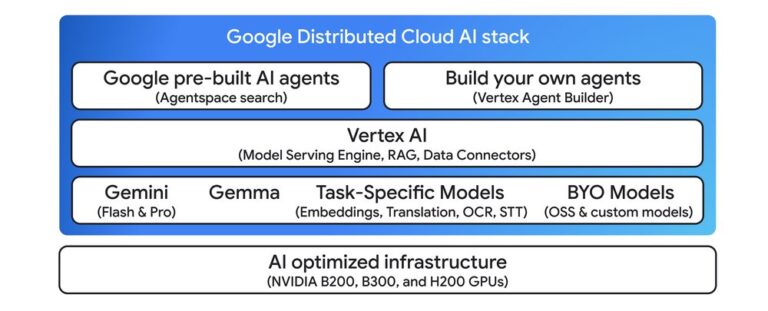
Earlier this year, we announced our commitment to bring Gemini to on-premises environments with Google Distributed Cloud (GDC). Today, we are excited to announce that Gemini on GDC is now available to customers. For years, enterprises and governments with the strictest data security and sovereignty requirements have faced a difficult choice: adopt modern AI or protect their data. Today, that compromise ends. We are announcing the general availability of Gemini on GDC air-gapped and preview of Gemini on GDC connected, bringing Google's most advanced models directly into your data center.  We are inspired by initial feedback from customers, including Singapore’s Centre for Strategic Infocomm Technologies (CSIT), Government Technology Agency of Singapore (GovTech Singapore), Home Team Science and Technology Agency (HTX), KDDI, and Liquid C2, who are excited to gain the advantages of generative AI with Gemini on GDC.  Transformative AI capabilities, on-premises Gemini models offer groundbreaking capabilities, from processing extensive context to native multimodal understanding of text, images, audio, and video. This unlocks a wide array of high-impact use cases on secure infrastructure: Unlock new markets and global collaboration: Instantly break down language barriers across your international operations, creating a more connected and efficient global workforce. Accelerate decision-making: Make faster, data-driven decisions by using AI to automatically summarize documents, analyze sentiment, and extract insights from your proprietary datasets. Improve employee efficiency and customer satisfaction: Deliver instant, 24/7 support and enhance user satisfaction by developing intelligent chatbots and virtual assistants for customers and employees. Increase development velocity: Ship higher-quality software faster by using Gemini for automated code generation, intelligent code completion, and proactive bug detection. Strengthen safety & compliance: Protect your users with AI-powered safety tools that automatically filter harmful content and ensure adherence to industry policies. aside_block <ListValue: [StructValue([('title', 'Try Google Cloud for free'), ('body', <wagtail.rich_text.RichText object at 0x3ec194138dc0>), ('btn_text', ''), ('href', ''), ('image', None)])]> Secure AI infrastructure where you need it It takes more than just a model to drive business value with generative AI; you need a complete platform that includes scalable AI infrastructure, a library with the latest foundational models, high-performance inferencing services, and pre-built AI agents like Agentspace search. GDC provides all that and more with an end-to-end AI stack combining our latest-generation AI infrastructure with the power of Gemini models to accelerate and enhance all your AI workloads. Delivering these transformative capabilities securely requires a complete, end-to-end platform that only Google is providing today : Performance at scale: GDC utilizes the latest NVIDIA GPU accelerators, including the NVIDIA Hopper and Blackwell GPUs. A fully managed Gemini endpoint is available within a customer or partner data center, featuring a seamless, zero-touch update experience. High performance and availability are maintained through automatic load balancing and auto-scaling of the Gemini endpoint, which is handled by our L7 load balancer and advanced fleet management capabilities. Foundation of security and control: Security is a core component of our solution, with audit logging and access control capabilities that provide full transparency for customers. This allows them to monitor all data traffic in and out of their on-premises AI environment and meet strict compliance requirements. The platform also features Confidential Computing support for both CPUs (with Intel TDX) and GPUs (with NVIDIA's confidential computing) to secure sensitive data and prevent tampering or exfiltration. Flexibility and speed for your AI strategy: the platform supports a variety of industry-leading models including Gemini 2.5 Flash and Pro, Vertex AI task-specific models (translation, optical character recognition, speech-to-text, and embeddings generation), and Google’s open-source Gemma models. GDC also provides managed VM shapes (A3 & A4 VMs) and Kubernetes clusters giving customers the ability to deploy any open-source or custom AI model, and custom AI workloads of their choice. This is complemented by Vertex AI services that provide an end-to-end AI platform including a managed serving engine, data connectors, and pre-built agents like Agentspace search (in preview) for a unified search experience across on-premises data. What our customers are saying “As a key GDC collaboration partner in shaping the GDC air-gapped product roadmap and validating the deployment solutions, we’re delighted that this pioneering role has helped us grow our cutting-edge capabilities and establish a proven deployment blueprint that will benefit other agencies with similar requirements. This is only possible with the deep, strategic collaboration between CSIT and Google Cloud. We’re also excited about the availability of Gemini on GDC, and we look forward to building on our partnership to develop and deploy agentic AI applications for our national security mission.”  - Loh Chee Kin, Deputy Chief Executive, Centre for Strategic Infocomm Technologies (CSIT) “One of our priorities is to harness the potential of AI while ensuring that our systems and the services citizens and businesses rely on remain secure. Google Cloud has demonstrated a strong commitment to supporting the public sector with initiatives that enable the agile and responsible adoption of AI. We look forward to working more closely with Google Cloud to deliver technology for the public good.” - Goh Wei Boon, Chief Executive, Government Technology Agency of Singapore “The ability to deploy Gemini on Google Distributed Cloud will allow us to bridge the gap between our on-premises data and the latest advancements in AI. Google Distributed Cloud gives us a secure, managed platform to innovate with AI, without compromising our strict data residency and compliance requirements.” - Ang Chee Wee, Chief AI Officer, Home Team Science & Technology Agency (HTX) “The partnership with Google Cloud and the integration of Google's leading Gemini models will bring cutting-edge AI capabilities, meet specific performance requirements, address data locality and regulatory needs of Japanese businesses and consumers.” - Toru Maruta, Executive Officer, Head of Advancing Business Platform Division, KDDI "Data security and sovereignty are paramount for our customers. With Gemini on Google Distributed Cloud, our Liquid Cloud and Cyber Security solution would deliver strategic value to ensure our customers in highly regulated industries can harness the power of AI while keeping their most valuable data under their control." - Oswald Jumira, CEO Liquid C2 Gemini everywhere is here The era of on-premises AI without compromise is here. To bring the power of Gemini to your on-premises environment, request a strategy session with our experts.

A Coding Implementation of Quantum State Evolution, Decoherence, and Entanglement Dynamics using QuTiP

1f52c

In this advanced QuTiP tutorial, we explore the rich dynamics of quantum systems using Python and the QuTiP framework. We’ll begin by preparing fundamental single- and two-qubit states, including Bell pairs, and then move on to implement key quantum operations such as Pauli matrices, Hadamard gates, and CNOT. From there, we’ll simulate Rabi oscillations in […] The post A Coding Implementation of Quantum State Evolution, Decoherence, and Entanglement Dynamics using QuTiP appeared first on MarkTechPost.

Drop Into the Battle: ‘Gears of War: Reloaded Unleashed’ Launches on GeForce NOW

gfn thursday gow reloaded nv blog 1280x680 logo

Brace yourself, COGs — the Locusts aren’t the only thing rising up. The Coalition’s legendary shooter Gears of War: Reloaded is launching day one on GeForce NOW. But that’s just the start. This GFN Thursday, seven games join the GeForce NOW library, including Ubisoft’s The Rogue Prince of Persia, the electrifying 2D roguelike action-platformer. More Read Article

Defense Logistics Agency selects Google Public Sector to modernize global supply chain operations – the agency’s first AI-ready commercial cloud partnership

The backbone of U.S. national defense is a resilient, intelligent, and secure supply chain. The Defense Logistics Agency (DLA) manages this critical mission, overseeing the end-to-end global supply chain for all five military services, military commands, and a host of federal and international partners.Today, Google Public Sector is proud to announce a new $48 million contract with the DLA to support its vital mission. Through a DLA Enterprise Platform agreement, Google Public Sector will provide a modern, secure, and AI-ready cloud foundation to enhance DLA's operational capabilities and provide meaningful cost savings. This marks a pivotal moment for the DoD – away from legacy government clouds and onto a modern, born-in-the-cloud provider that is also a DoD-accredited commercial cloud environment.The Need for a Modern FoundationTo effectively manage a supply chain of global scale and complexity, DLA requires access to the most advanced digital tools available. Previously, DLA, like many other federal agencies and organizations across the federal government, were restricted to a “GovCloud” environment, which are isolated and often less-reliable versions of commercial clouds. These limitations created challenges in data visualization, interoperability between systems, and network resiliency, while also contributing to high infrastructure and support costs.The driver for change was clear: a need for a modern, scalable, and secure platform to ensure mission success into the future. By migrating to Google Cloud, DLA will be able to harness modern cloud best practices combined with Google's highly performant and resilient cloud infrastructure.A Modern, Secure, and Intelligent PlatformDLA leadership embraced a forward-thinking approach to modernization, partnering with Google Public Sector to deploy the DLA Enterprise Platform. This multi-phased approach provides a secure, intelligent foundation for transformation, delivering both immediate value and a long-term modernization roadmap.The initial phase involved migrating DLA's key infrastructure and data onto Google Cloud which will provide DLA with an integrated suite of services to unlock powerful data analytics and AI capabilities—turning vast logistics data into actionable intelligence with tools like BigQuery, Looker, and Vertex AI Platform. Critically, the platform is protected end-to-end by Google's secure-by-design infrastructure and leading threat intelligence, ensuring DLA’s mission is defended against sophisticated cyber threats.By leveraging Google Cloud, DLA will be empowered to:Optimize logistics and reduce costs through the migration of business planning resources to a more efficient, born-in-the-cloud infrastructure.Enhance decision-making with advanced AI/ML for warehouse modernization and transportation management.Improve collaboration through a more connected and interoperable technology ecosystem.Strengthen security by defending against advanced cyber threats with Mandiant’s expertise and Google Threat Intelligence.Google Public Sector’s partnership with DLA builds on the momentum of its recent $200 million-ceiling contract award by the DoD’s Chief Digital and Artificial Intelligence Office (CDAO) to accelerate AI and cloud capabilities across the agency. We are honored to support DLA’s mission as it takes this bold step into the future of defense logistics.Register to attend our Google Public Sector Summit taking place on Oct. 29, 2025, in Washington, D.C. Designed for government leaders and IT professionals, 1,000+ attendees will delve into the intersection of AI and security with agency and industry experts, and get hands-on with Google’s latest AI technologies.

Data Centers May House AI—But Operators Don’t Trust AI (Yet)

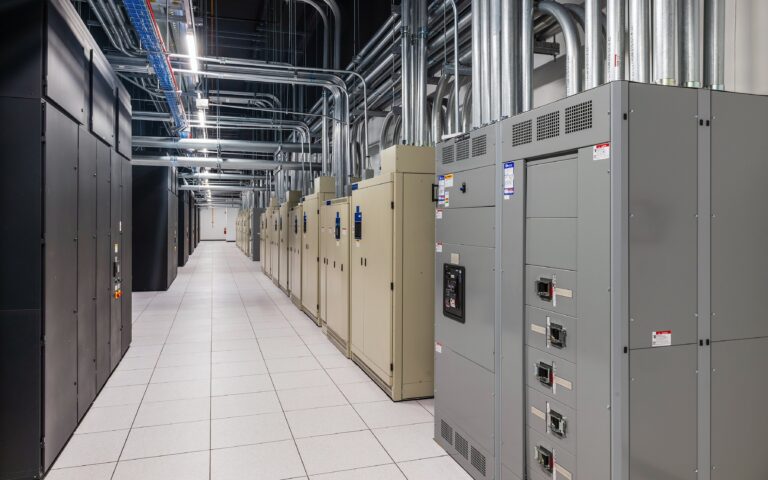
industrial server room with grey cabinets and extensive overhead piping

AI is starting to be trusted with high-stakes tasks, including running automated factories and guiding military drones through hostile airspace. But when it comes to managing the data centers that power this AI revolution, human operators are far more cautious.According to a new survey of over 600 data center operators worldwide by Uptime Institute, a data center inspection and rating firm, only 14 percent say they would trust AI systems to change equipment configurations, even if it’s trained on years of historical data. In the same survey, just 1 in 3 operators say they would trust AI systems to control data center equipment.Their skepticism may be justified: Despite pouring tens of billions of US dollars into AI systems, 95 percent of organizations thus far lack a clear return on investment, according to a recent MIT report of generative AI usage. Advanced industries, which include factories and data centers, ranked near the bottom of the list of sectors transformed by AI, if at all.Operator Trust in AI SystemsEven before the AI-driven push to expand data centers, data center operators themselves are known to be a relatively change-averse crowd who have been disappointed by buzzy technologies of the past, says Rose Weinschenk, a research associate at Uptime Institute. Operators often have electrical engineering or technical mechanical backgrounds, with training in the running of critical facilities; others work on the IT or network system side and are also considered operators.Operator trust in AI declined every year for the three years following OpenAI’s release of ChatGPT in 2022. When asked by Uptime if they trusted a trained AI system to run data center operations, 24 percent of respondents said no in 2022 and 42 percent said no in 2024. While the public has marveled at the seemingly all-knowing nature of new large language models, operators seem to feel this type of AI is too limited and unpredictable for use in data centers.But now, operators appear to have entered a “period of careful testing and validation” of different types of AI systems in certain data center operations, said Uptime research analyst Max Smolaks in a public webinar of the latest survey results. To capture changing sentiments, Uptime asked operators in 2025 which applications AI might serve as a trustworthy decision-maker, assuming adequate past training. Over 70 percent of operators say they would trust AI to analyze sensor data or predict maintenance tasks for equipment, the survey shows.“Data center operators are very, very happy to do certain things using AI, and they will never, never trust AI to do certain other things,” Smolaks said in the webinar. AI’s Unpredictability in Data CentersOne reason why trust in AI is low for critical control of equipment is the technology’s unpredictability. Data centers are run on “good, old-fashioned” engineering, such as programmed if/then logic, says Robert Wright, the chief data center officer at Ilkari Data Centers, a data center startup company with two centers in Colombia and Iceland. “We say that we can’t run on luck, we have to run on certainty.”Data centers are a complex series of systems that feed into each other. Mere seconds can pass before catastrophic failures occur that result in damaged chips, wasted money, angry customers, or fatal fires. In the high-stakes environment of data centers, anonymous posters on the r/datacenter Reddit forum who replied to an IEEE Spectrum query generally failed to see a reason to justify the risk that AI could bring.Distrust may also mask an underlying job insecurity. Workers across many industries are concerned that AI will take their jobs. But the 2025 Uptime survey found that only one in five operators view AI as a way of reducing average staffing level.“Operators believe that today’s AI is not going to replace the staff required to run their facilities,” Smolaks said in the Uptime webinar. “It might be coming for office workers, but data center jobs appear to be safe from AI for now.”But it’s understandable for early career operators to still feel like this technology is coming for their jobs, says electrical engineer Jackson Fahrney, who has worked in data centers for over eight years. Someone just six months on the job may view an AI system like being told, “Here, train your replacement,” he says. In reality, he does not think AI will replace himself or others inside data centers. Yet AI carries an more “ominous” presence in the workplace than machine learning tools, which have long been part of an operator’s toolkit and are meant to assist operators when making decisions.It could be that AI is the cherry on top of an industry-wide trend to reduce the number of operators within data centers, says Chris McLean, a data center design and construction consultant.Whereas 60 engineers might have run a data center in the past, now only six are needed, McLean says. Less is required from those six, as well, as more and more critical maintenance is being outsourced to specialists outside of the data center. “Now you offset all of your risk with a low-cost human and a high-cost AI,” McLean said. “And I’ve got to imagine that that’s scary for operators.”That said, there are more data center jobs than qualified applicants, as previously reported by Spectrum. Two-thirds of operators struggle with staff retention or recruitment, according to Uptime’s 2025 survey, similar to the responses from surveys for the previous two years.Efficient AI Algorithms for Data CentersStill, there are useful algorithms built on decades of machine learning research that could make data center operation more efficient. The most established AI system for data centers is predictive maintenance, says Ilkari’s Wright. If the readings of a particular HVAC unit are rising faster than those from other units, for instance, the system can predict when that unit needs to be serviced.Other AI systems focus on optimizing chiller plants, which are, in effect, the refrigerator systems that keep the data center cool by circulating chilled water and air. Chillers account for much of the energy consumed by data centers. Data about weather patterns, load on the grid, and equipment degradation over time all feed into a single AI system run on hardware within the facility to optimize the total energy consumption, says Michael Berger, who runs research and development at the Australia-based energy software company Conserve IT.But Berger is quick to note that his AI optimization software does not control equipment. It runs on top of the basic control loop and refines parameters to use less energy while achieving the same outcome, he says. Berger prefers to call this system machine learning instead of AI because of how specialized it is to the needs of a data center.Others fully embrace AI, both the name and the technology, like Joe Minarik, the chief operating officer at DataBank, a Dallas-based data center company with 73 data centers across the U.S. and United Kingdom. He attributes his admittedly bullish attitude towards AI to his 17 years working for Amazon Web Services, where software is king. Currently, DataBank uses AI to write software, and there are plans to roll out AI systems for automated ticket generation and monitoring, as well as network configuration monitoring and adjustments by the end of the year. AI for bigger tasks, such as cooling, are tentatively scheduled for late 2026, subject to the time it takes to train the AI on enough data, he said.AI does hallucinate: Minarik has watched it give the wrong information and send his team down the wrong path. “We do, we see it happen today. But we also see it getting better and better once we give it more time,” he says.The key is “tremendous amounts of data points” in order for AI to understand the system, Minarik says. It’s not unlike training a human data center engineer about every possible scenario that could happen within the halls of a data center. Hyperscalers and enterprise data centers, whose single customer is the company that owns the data center, are deploying AI at a faster pace than commercial companies like DataBank. Minarik is hearing of AI systems that run entire networks for in-house data centers.When DataBank rolls out AI for more significant data center operations, it will be kept on a tight leash, Minarik says. Operators will still make final executions. While AI will undoubtedly change how data centers run, Minarik sees operators as a core part of that new future. Data centers are physical places with on-site activity. “AI can’t walk out there and change a spark plug,” he says, or hear an odd rattle from a server rack. Although Minarik says that one day there could be sensors for some of these issues, they’ll still need physical human techs to fix the equipment that keep data centers running.“If you want a safe job that can protect you from AI,” Minarik says, “Go to data centers.”

Game On: How Modders Reimagine Classic Games With NVIDIA RTX Remix and Generative AI

remix mod contest nv blog 1280x680 1

Last week at Gamescom, NVIDIA announced the winners of the NVIDIA and ModDB RTX Remix Mod Contest, a $50,000 competition celebrating community-made projects that reimagine classic games with modern fidelity. The entries showed how far video game modding has come, with individual modders and small teams pulling off overhauls of similar quality to those created Read Article