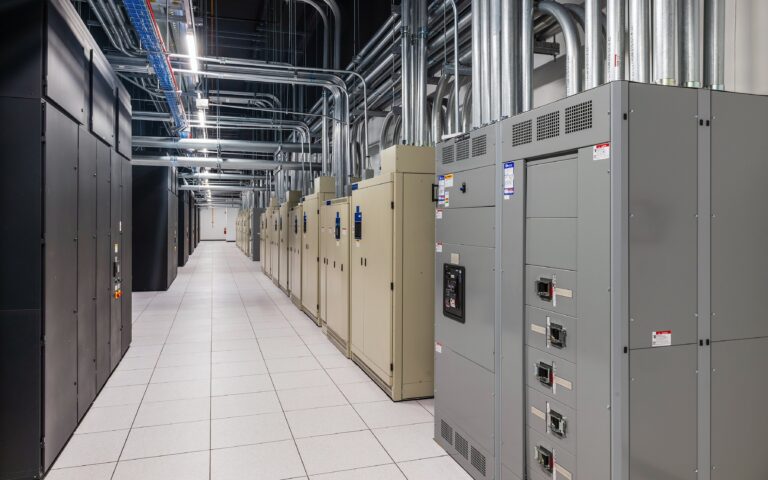
AI is starting to be trusted with high-stakes tasks, including running automated factories and guiding military drones through hostile airspace. But when it comes to managing the data centers that power this AI revolution, human operators are far more cautious.According to a new survey of over 600 data center operators worldwide by Uptime Institute, a data center inspection and rating firm, only 14 percent say they would trust AI systems to change equipment configurations, even if it’s trained on years of historical data. In the same survey, just 1 in 3 operators say they would trust AI systems to control data center equipment.Their skepticism may be justified: Despite pouring tens of billions of US dollars into AI systems, 95 percent of organizations thus far lack a clear return on investment, according to a recent MIT report of generative AI usage. Advanced industries, which include factories and data centers, ranked near the bottom of the list of sectors transformed by AI, if at all.Operator Trust in AI SystemsEven before the AI-driven push to expand data centers, data center operators themselves are known to be a relatively change-averse crowd who have been disappointed by buzzy technologies of the past, says Rose Weinschenk, a research associate at Uptime Institute. Operators often have electrical engineering or technical mechanical backgrounds, with training in the running of critical facilities; others work on the IT or network system side and are also considered operators.Operator trust in AI declined every year for the three years following OpenAI’s release of ChatGPT in 2022. When asked by Uptime if they trusted a trained AI system to run data center operations, 24 percent of respondents said no in 2022 and 42 percent said no in 2024. While the public has marveled at the seemingly all-knowing nature of new large language models, operators seem to feel this type of AI is too limited and unpredictable for use in data centers.But now, operators appear to have entered a “period of careful testing and validation” of different types of AI systems in certain data center operations, said Uptime research analyst Max Smolaks in a public webinar of the latest survey results. To capture changing sentiments, Uptime asked operators in 2025 which applications AI might serve as a trustworthy decision-maker, assuming adequate past training. Over 70 percent of operators say they would trust AI to analyze sensor data or predict maintenance tasks for equipment, the survey shows.“Data center operators are very, very happy to do certain things using AI, and they will never, never trust AI to do certain other things,” Smolaks said in the webinar. AI’s Unpredictability in Data CentersOne reason why trust in AI is low for critical control of equipment is the technology’s unpredictability. Data centers are run on “good, old-fashioned” engineering, such as programmed if/then logic, says Robert Wright, the chief data center officer at Ilkari Data Centers, a data center startup company with two centers in Colombia and Iceland. “We say that we can’t run on luck, we have to run on certainty.”Data centers are a complex series of systems that feed into each other. Mere seconds can pass before catastrophic failures occur that result in damaged chips, wasted money, angry customers, or fatal fires. In the high-stakes environment of data centers, anonymous posters on the r/datacenter Reddit forum who replied to an IEEE Spectrum query generally failed to see a reason to justify the risk that AI could bring.Distrust may also mask an underlying job insecurity. Workers across many industries are concerned that AI will take their jobs. But the 2025 Uptime survey found that only one in five operators view AI as a way of reducing average staffing level.“Operators believe that today’s AI is not going to replace the staff required to run their facilities,” Smolaks said in the Uptime webinar. “It might be coming for office workers, but data center jobs appear to be safe from AI for now.”But it’s understandable for early career operators to still feel like this technology is coming for their jobs, says electrical engineer Jackson Fahrney, who has worked in data centers for over eight years. Someone just six months on the job may view an AI system like being told, “Here, train your replacement,” he says. In reality, he does not think AI will replace himself or others inside data centers. Yet AI carries an more “ominous” presence in the workplace than machine learning tools, which have long been part of an operator’s toolkit and are meant to assist operators when making decisions.It could be that AI is the cherry on top of an industry-wide trend to reduce the number of operators within data centers, says Chris McLean, a data center design and construction consultant.Whereas 60 engineers might have run a data center in the past, now only six are needed, McLean says. Less is required from those six, as well, as more and more critical maintenance is being outsourced to specialists outside of the data center. “Now you offset all of your risk with a low-cost human and a high-cost AI,” McLean said. “And I’ve got to imagine that that’s scary for operators.”That said, there are more data center jobs than qualified applicants, as previously reported by Spectrum. Two-thirds of operators struggle with staff retention or recruitment, according to Uptime’s 2025 survey, similar to the responses from surveys for the previous two years.Efficient AI Algorithms for Data CentersStill, there are useful algorithms built on decades of machine learning research that could make data center operation more efficient. The most established AI system for data centers is predictive maintenance, says Ilkari’s Wright. If the readings of a particular HVAC unit are rising faster than those from other units, for instance, the system can predict when that unit needs to be serviced.Other AI systems focus on optimizing chiller plants, which are, in effect, the refrigerator systems that keep the data center cool by circulating chilled water and air. Chillers account for much of the energy consumed by data centers. Data about weather patterns, load on the grid, and equipment degradation over time all feed into a single AI system run on hardware within the facility to optimize the total energy consumption, says Michael Berger, who runs research and development at the Australia-based energy software company Conserve IT.But Berger is quick to note that his AI optimization software does not control equipment. It runs on top of the basic control loop and refines parameters to use less energy while achieving the same outcome, he says. Berger prefers to call this system machine learning instead of AI because of how specialized it is to the needs of a data center.Others fully embrace AI, both the name and the technology, like Joe Minarik, the chief operating officer at DataBank, a Dallas-based data center company with 73 data centers across the U.S. and United Kingdom. He attributes his admittedly bullish attitude towards AI to his 17 years working for Amazon Web Services, where software is king. Currently, DataBank uses AI to write software, and there are plans to roll out AI systems for automated ticket generation and monitoring, as well as network configuration monitoring and adjustments by the end of the year. AI for bigger tasks, such as cooling, are tentatively scheduled for late 2026, subject to the time it takes to train the AI on enough data, he said.AI does hallucinate: Minarik has watched it give the wrong information and send his team down the wrong path. “We do, we see it happen today. But we also see it getting better and better once we give it more time,” he says.The key is “tremendous amounts of data points” in order for AI to understand the system, Minarik says. It’s not unlike training a human data center engineer about every possible scenario that could happen within the halls of a data center. Hyperscalers and enterprise data centers, whose single customer is the company that owns the data center, are deploying AI at a faster pace than commercial companies like DataBank. Minarik is hearing of AI systems that run entire networks for in-house data centers.When DataBank rolls out AI for more significant data center operations, it will be kept on a tight leash, Minarik says. Operators will still make final executions. While AI will undoubtedly change how data centers run, Minarik sees operators as a core part of that new future. Data centers are physical places with on-site activity. “AI can’t walk out there and change a spark plug,” he says, or hear an odd rattle from a server rack. Although Minarik says that one day there could be sensors for some of these issues, they’ll still need physical human techs to fix the equipment that keep data centers running.“If you want a safe job that can protect you from AI,” Minarik says, “Go to data centers.”